
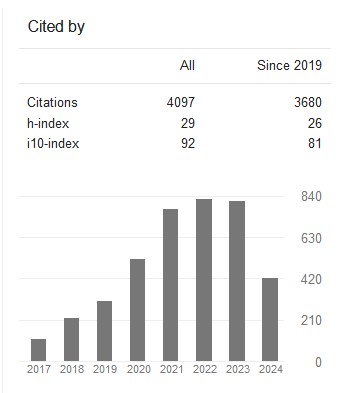
Google Scholar Analysis
For Authors








ijaems Issue
A Review of Cylindrical Battery Thermal Management Systems Based on the Combination of Phase Change Materials and Liquid Cooling( Vol-12,Issue-3,May - June 2026 ) |
|
Author(s): Zheng-Kuan Deng, Yan-Zuo Chang, Qin-Wen Guan, Jie-Qiu, Jun-Ru Wu, Yun-Fan Ye, Zhuo-Hao Huang, Yu-Xiao |
Download Full Text PDF
Total View : 275
Downloads : 2
Page No: 344-353
|
Keywords: |
|
|
Battery thermal management system, Cylindrical battery pack, Multi-objective optimization, Phase change material |
|
Abstract: |
|
|
Employing a hybrid battery thermal management system (BTMS) is currently a mainstream approach to improving the safety and stability of battery pack operation, primarily to mitigate the risk of thermal runaway that tends to occur during the charge–discharge process of cylindrical battery packs. The battery thermal management system combining phase change material (PCM) and liquid cooling has become a popular research direction. The hybrid BTMS investigated in this paper uses PCM as the core temperature control unit, leveraging its latent heat storage characteristics to efficiently absorb and dissipate the substantial heat generated on the battery surface, thereby achieving rapid regulation of battery temperature. The liquid cooling circuit promptly removes the heat accumulated in the PCM, quickly restoring its latent heat storage capacity and further enhancing the heat exchange efficiency of liquid cooling. This synergy between PCM temperature control and liquid cooling heat dissipation effectively optimizes the overall heat dissipation performance of the battery pack and significantly reduces the risk of thermal runaway during charge–discharge cycles. However, issues such as increased system complexity, the diversity of PCM materials, and the need for liquid cooling technology optimization have emerged as new challenges for PCM–liquid cooling hybrid BTMS. Therefore, this paper aims to summarize the design and optimization of hybrid BTMS based on the combination of PCM and liquid cooling, and also proposes a multi-objective optimization approach to seek an optimal and reasonable parameter combination for the specific structural complexity of cylindrical battery packs. |
|
| Article Info: | |
|
Received: 01 May 2026; Received in revised form: 30 May 2026; Accepted: 03 Jun 2026; Available online: 07 Jun 2026 |
|
Cite This Article: |
|
|
Citations:
APA | ACM | Chicago | Harvard | IEEE | MLA | Vancouver | Bibtex
| |
Share: |
|
 DOI:
DOI: