Google Scholar Analysis
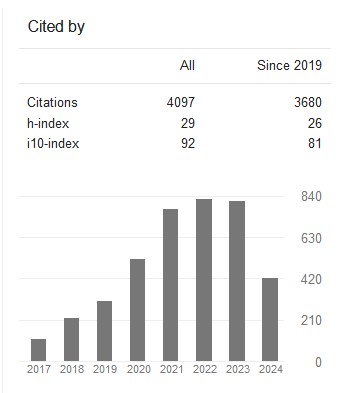
For Authors








ijaems Issue
Adversarial Robustness in AI-Driven Cybersecurity Solutions: Thwarting Evasion Assaults in Real-Time Detection Systems( Vol-11,Issue-5,September - October 2025 ) |
|
Author(s): Dr. Mohammed Musthafa |
Download Full Text PDF
Download with Cover Page
Total View : 1015
Downloads : 9
Page No: 073-082
|
Keywords: |
|
|
Cybersecurity, Intrusion Detection, Deep Learning, RNN, Transformer |
|
Abstract: |
|
|
The incorporation of Artificial Intelligence (AI), especially deep learning models, into cybersecurity frameworks has greatly improved the identification and mitigation of cyber threats. Nonetheless, these smart systems encounter a significant and rising threat—adversarial attacks. Malicious entities create subtle alterations in network traffic or system actions that mislead AI models into misidentifying threats as harmless, facilitating evasion tactics that can circumvent real-time intrusion detection systems (IDS). This study investigates the susceptibility of deep learning-based Intrusion Detection Systems (IDS) to adversarial examples and suggests a robust detection framework aimed at improving resilience against these evasion tactics. The suggested system merges adversarial training, input sanitization, and resilient model architectures, including adversarial-aware Convolutional Neural Networks (CNN) and defensive autoencoders. Employing benchmark datasets like CIC-IDS2017 and UNSW-NB15, we recreate various adversarial scenarios—created using Fast Gradient Sign Method (FGSM) and Projected Gradient Descent (PGD)—to evaluate the effect on detection performance. Experimental findings indicate that conventional DL models experience a significant decline in performance when exposed to adversarial circumstances, with accuracy decreasing by more than 20% in certain instances. Conversely, our suggested framework shows a noticeable enhancement in adversarial robustness, keeping more than 91% detection accuracy during attacks and considerably lowering false positives. |
|
| Article Info: | |
|
Received: 16 Aug 2025; Received in revised form: 14 Sep 2025; Accepted: 18 Sep 2025; Available online: 25 Sep 2025 |
|
Cite This Article: |
|
|
Citations:
APA | ACM | Chicago | Harvard | IEEE | MLA | Vancouver | Bibtex
| |
Share: |
|
 DOI:
DOI: