
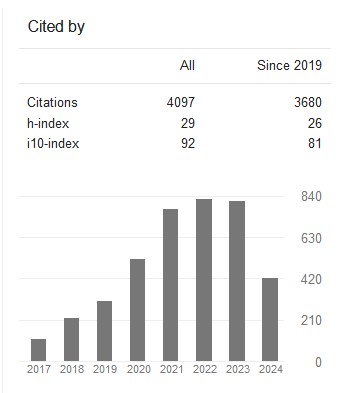
Google Scholar Analysis
For Authors








ijaems Issue
An Analytical Study of the Factors Affecting the Crop Pattern in India( Vol-11,Issue-3,May - June 2025 ) |
|
Author(s): Dr. Bandna Ranga |
Download Full Text PDF
Total View : 454
Downloads : 3
Page No: 87-93
|
Keywords: |
|
|
agricultural production, farming, plantation, crop pattern, mix Cropping, kharif crops, rabi crops. |
|
Abstract: |
|
|
Actually, a cropping pattern of any geographical area is keenly associated with its land use pattern, which is the arrangement and distribution of total cultivated land for different purposes such as forestation, cropping, human settlement etc. Late 2024, the total area covered by the ‘rabi crops’ in India indicated a significant contribution to wheat, pulses and oilseeds reaching 428 lakh hectares in which wheat cropping covered 320 lakh hectares; it was an increase of 1.38 lakh hectares when compared to the past year. On the contrary, the rice cropping area increased to 394.28 lakh hectares which was 378.04 lakh hectares in the previous years. Meanwhile, the whole cropping area in India was recorded at 1114.95 lakh hectares including all crops during 2023-24 with an increase of 6.51 lakh hectares when compared to the past years. As per statistical data received from a report by the Agriculture Ministry of India, in the years 2024-25, there is a remarkable change in cropping pattern in India. In the recent years, India has become the world’s top most or largest producer country of a range of agricultural products; dry fruits, raw materials for textiles, root and tuber crops, pulses, fish raised on farms, eggs, coconuts, sugarcane, and vegetables of various kinds, among many others. For the fiscal year ending June 2024 with a normal monsoon, Indian agriculture recorded production of wheat and rice as major crops recording a boost in the production. Meanwhile, lentils and other major food staples also saw a noticeable increase during this time. However, crop output in India is affected by a number of variables that have become quite predictable such as: the performance of the monsoon, the farm size, the input supply, and the accompanying government agricultural policies. As we know, three monsoon cropping seasons are widely recognized in India as: Kharif, Rabi and Zaid, which can be described as cropping seasons defined by climate. The Kharif cropping season occurs at the same time as the South-west monsoon and is particularly advantageous to tropical crops such as rice, cotton, jute, bajra, etc. The Rabi cropping season starts about October–November and progresses to the spring months, while Zaid is a short summer season following the Rabi harvest. The present research paper makes an analysis of cropping patterns and factors affecting it from 2015 to 2025. Moreover, this research is exploratory in nature and based on the secondary sources of data collection from different articles published in reputed journals, reference books and statistical reports of the Ministry of Agriculture, Economic Survey etc. To pace the study, the researcher has also used some observational insights. |
|
| Article Info: | |
|
Received: 22 May 2025; Received in revised form: 19 Jun 2025; Accepted: 25 Jun 2025; Available online: 30 Jun 2025 |
|
Cite This Article: |
|
|
Citations:
APA | ACM | Chicago | Harvard | IEEE | MLA | Vancouver | Bibtex
| |
Share: |
|
 DOI:
DOI: