
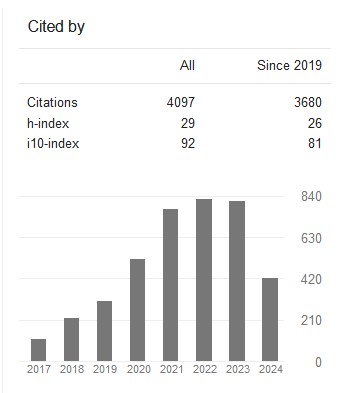
Google Scholar Analysis
For Authors








ijaems Issue
Architectural Patterns for Distributed Energy Management Systems Based on Programmable Logic Controllers( Vol-12,Issue-3,May - June 2026 ) |
|
Author(s): Arkadi Port |
Download Full Text PDF
Total View : 232
Downloads : 2
Page No: 122-131
|
Keywords: |
|
|
distributed energy management systems, hybrid energy systems, utility-scale PV, programmable logic controllers, SCADA architecture, predictive control, interoperability, signal normalization |
|
Abstract: |
|
|
The article is dedicated to the explanation of architectural patterns that shape distributed energy management systems implemented through programmable logic controllers. Relevance is determined by the rapid spread of distributed renewable generation, storage units, and supervisory platforms across distributed energy sites, where stable operation increasingly depends on how heterogeneous components are coordinated rather than on the performance of any single device. Novelty lies in the interpretation of PLC-based energy management as a layered control environment in which signal validation, semantic normalization, communication mediation, mode logic, and predictive adjustment are structurally interconnected. The work describes the internal organization of these architectures and studies how control functions are redistributed between field devices, PLC loops, gateways, supervisory systems, and analytical layers. Special attention is given to interoperability under protocol fragmentation, export-limiting behavior, and the separation of control-critical data from telemetry streams. The work sets itself the goal of explaining how such architectures preserve stability under variability and partial degradation. Analytical review, comparative interpretation, conceptual grouping, and synthesis are used to solve this task. The conclusion describes the structural conditions of resilient design. The article will be useful for automation engineers, system integrators, and researchers working with hybrid distributed energy infrastructures. |
|
| Article Info: | |
|
Received: 07 Apr 2026; Received in revised form: 05 May 2026; Accepted: 08 May 2026; Available online: 15 May 2026 |
|
Cite This Article: |
|
|
Citations:
APA | ACM | Chicago | Harvard | IEEE | MLA | Vancouver | Bibtex
| |
Share: |
|
 DOI:
DOI: