
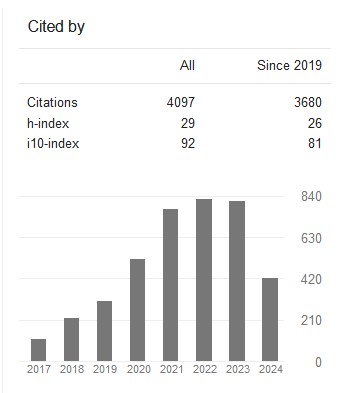
Google Scholar Analysis
For Authors








ijaems Issue
Critical Importance of Soft Skills Education for Generation Beta in Schools: Preparing Future Citizens for an Era of Artificial Intelligence, Human–Machine Collaboration, and Cyborg-Assisted Teaching Systems( Vol-12,Issue-3,May - June 2026 ) |
|
Author(s): Shamsa Rehna |
Download Full Text PDF
Total View : 273
Downloads : 8
Page No: 411-417
|
Keywords: |
|
|
Generation Beta; Soft Skills Education; Artificial Intelligence; Human–Machine Collaboration; Emotional Intelligence; Creativity and Innovation; Educational Technology; Future of Education; Leadership Development; AI Literacy; Fourth Industrial Revolution. |
|
Abstract: |
|
|
The rapid advancement of artificial intelligence (AI), robotics, machine learning, brain-computer interfaces, and other emerging technologies is transforming educational systems worldwide. Generation Beta (children born between 2025 and 2039) will be the first generation to experience these technologies as an integrated part of everyday life from birth. Future classrooms are expected to incorporate AI-powered personalized learning systems, educational robots, virtual and augmented reality environments, intelligent tutoring systems, and potentially cyborg-assisted teaching technologies. While these innovations offer significant opportunities for improving educational access, personalization, and efficiency, they also raise concerns regarding the development of human-centered competencies. This paper argues that soft skills education must become a core component of educational policy to prepare Generation Beta for an era characterized by human–machine collaboration. Through a conceptual analysis of emerging educational trends, the study highlights the increasing importance of communication, emotional intelligence, creativity, leadership, adaptability, collaboration, critical thinking, and ethical reasoning. The paper further examines the implications of soft skills development for economic growth, workforce competitiveness, entrepreneurship, and social cohesion. Finally, it proposes policy recommendations including curriculum reform, teacher training, project-based learning, AI literacy initiatives, and soft skills assessment frameworks. The study concludes that future success will depend not only on technological proficiency but also on the cultivation of uniquely human capabilities that complement advanced technological systems. |
|
| Article Info: | |
|
Received: 21 May 2026; Received in revised form: 18 Jun 2026; Accepted: 22 Jun 2026; Available online: 25 Jun 2026 |
|
Cite This Article: |
|
|
Citations:
APA | ACM | Chicago | Harvard | IEEE | MLA | Vancouver | Bibtex
| |
Share: |
|
 DOI:
DOI: