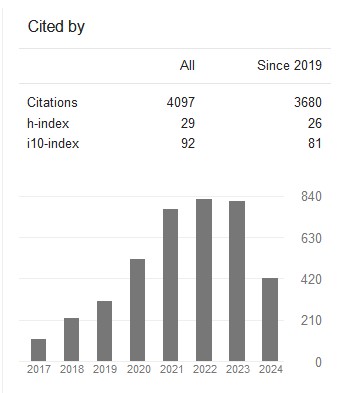
Google Scholar Analysis
For Authors








ijaems Issue
Cultural Competence and Practice Readiness of Filipino Internationally Educated Nurses in the U.S. Healthcare System: A Descriptive Comparative-Correlational Study( Vol-12,Issue-5,September - October 2026 ) |
|
Author(s): Katherine Ann A. Estimada, Maria Karmela C. Del Rosario |
Download Full Text PDF
Total View : 7
Downloads : 0
Page No: 058-100
|
Keywords: |
|
|
Cultural Competence, Practice Readiness, U.S. Healthcare System, Transition Experience, Clinical Problem Solving, Learning Engagement, Professional Integration, Cultural Awareness and Knowledge, Workforce Adaptation, Transcultural Nursing, Migration and Nursing Workforce |
|
Abstract: |
|
|
The study contributes quantitative evidence on the interaction between cultural competence and practice readiness among Filipino IENs in the U.S. healthcare system during their transition to practice. Filipino IENs are recognized for their solid clinical foundation, compassionate nature, and flexibility, but the literature has described challenges they may encounter during their transition to U.S. practice. The aim of this study was to determine their level of cultural competence and readiness for independent practice and to investigate significant differences between demographic and professional characteristics and the relationship between cultural competence and readiness for practice. This study employed a descriptive comparative correlational design. Data were collected using two validated instruments: the Cultural Competence Assessment Instrument (CCAI) and the Casey-Fink Readiness to Practice Survey. Proportional stratified sampling was used, and 101 Filipino Internationally Educated Nurses (IENs) participated. Descriptive statistics, Mann-Whitney U and Kruskal-Wallis H tests with Dunn's post hoc comparisons, and Spearman's rank-order correlation were used to analyze the data. Findings showed that participants had moderate levels of cultural competence in the awareness, knowledge, skills, and organizational support domains. Most respondents scored within the Competent/Emerging Adaptation range for practice readiness, suggesting a relatively stable level of preparedness for U.S. clinical practice. Cultural competence differed only by support system, and practice readiness differed only by Philippine language group, current position, and years in current position. All other profile variables showed no significant differences. Correlation results indicated a statistically significant, albeit weak, positive relationship between Cultural Awareness and Knowledge and clinical problem solving, learning activities, and overall practice readiness, but no relationship with confidence and skill performance. Conversely, Cultural Skills and Organizational Support were not significantly associated with any of the readiness domains. The study findings suggest that Filipino IENs enter U.S. practice with solid clinical foundations and developing cultural competence. They require structured support to enhance cultural awareness, system familiarity, and early confidence. Results indicate that readiness was weakly but significantly associated with cultural awareness and knowledge, but not with cultural skills or organizational support. Based on these findings, a 12-week transition program was proposed to support cultural competence and transition to U.S. practice. This program offers a structured, literature-aligned approach that may support Filipino IENs during their transition to U.S. practice. |
|
| Article Info: | |
|
Received: 16 Sep 2026; Received in revised form: 15 Oct 2026; Accepted: 20 Oct 2026; Available online: 25 Oct 2026 |
|
Cite This Article: |
|
|
Citations:
APA | ACM | Chicago | Harvard | IEEE | MLA | Vancouver | Bibtex
| |
Share: |
|
 DOI: