
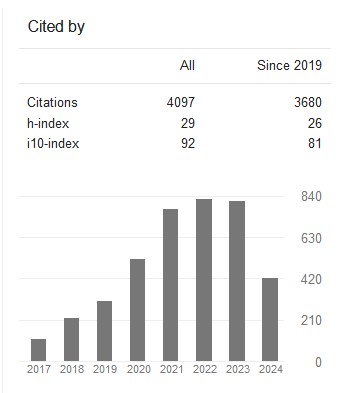
Google Scholar Analysis
For Authors








ijaems Issue
Decarbonization and Net-Zero Transition in Pakistan( Vol-12,Issue-3,May - June 2026 ) |
|
Author(s): Shah Jehan |
Download Full Text PDF
Total View : 275
Downloads : 2
Page No: 222-230
|
Keywords: |
|
|
Climate Change, Greenhouse Gas Emissions, Renewable Energy, Decarbonization, Net Zero Emissions. |
|
Abstract: |
|
|
The crisis of climate change today is a global issue in the 21st century. In developing countries as well as others around the globe, the challenge is for countries to develop their economies while simultaneously decreasing their GHG greenhouse gas emissions. Pakistan is one of the least polluters of all the countries of the world whose contribution to global GHGs is less than 1 but unfortunately Pakistan is one of the countries which is most sensitive towards climate change phenomenon such as rise in average atmospheric temperature, floods, droughts, shrinkage of glaciers and most importantly in security of energy supply. Energy switching towards renewable energy, Modernization of the industries, Policy changes, Transportation Electrification and Climate Finance have been addressed in the research study as critical parameters to assess the journey of Pakistan towards decarbonization and achieving net zero emission. The study looks into the emissions profile of Pakistan, how it consumes energy through different sectors of the country, the vast potential of renewable energy and Pakistans climate change commitments under the global agreements. The report further highlights the obstacles that are created by inadequate and ineffective institutions, paucity of finances and absence of right technology to combat climate change. In the past few years, it has been found that total GHGs emitted in Pakistan increased from 606 MtCO2e in 2021 to 609 MtCO2e in 2022, whereas GHG CO2 from fossil fuel increased from more than 200 MtCO2e in 2021 to more than 204 MtCO2e in 2022. The study showed that Pakistan has enormous potential in terms of renewable energy which if harnessed for Solar and Wind would help in revolutionizing the energy scenario of the country. To achieve the long term aspiration of Net Zero in the country, a holistic and time bound approach, coupled with energy efficient industrial development and funding for climate changes through the global platform of policies and regulations is needed. |
|
| Article Info: | |
|
Received: 28 Apr 2026; Received in revised form: 27 May 2026; Accepted: 30 May 2026; Available online: 02 Jun 2026 |
|
Cite This Article: |
|
|
Citations:
APA | ACM | Chicago | Harvard | IEEE | MLA | Vancouver | Bibtex
| |
Share: |
|
 DOI:
DOI: