
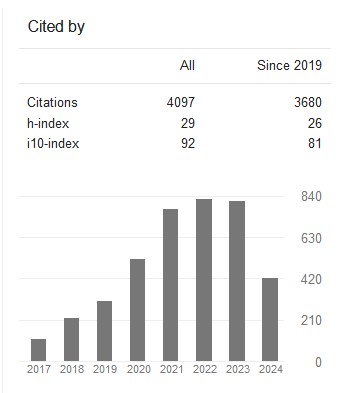
Google Scholar Analysis
For Authors








ijaems Issue
Evaluating the Impact of the Skills Training Course on the Operation and Maintenance of the Rice Processing System (RPS) on the Operational Efficiency and Asset Sustainability of Farmers’ Cooperatives and Associations in Nueva Ecija, Philippines( Vol-12,Issue-5,September - October 2026 ) |
|
Author(s): Irish Ramos Arambulo, Christopher M. Ladignon, Lorinda E. Pascual |
Download Full Text PDF
Total View : 296
Downloads : 11
Page No: 001-017
|
Keywords: |
|
|
Asset sustainability, milling recovery rate, Nueva Ecija, operational efficiency, postharvest mechanization, Rice Processing System (RPS), skills training evaluation, three-phase power grid. |
|
Abstract: |
|
|
This study evaluated the operational, technical, and cognitive impact of a five-day Skills Training Course on the Operation and Maintenance of the Rice Processing System (RPS) administered across Nueva Ecija, Philippines. Using an evaluative mixed-methods concurrent triangulation design combined with a one-group pre-test/post-test quasi-experimental approach, the study monitored fifteen (15) purposively selected beneficiaries (12 Farmers' Cooperatives and Associations and 3 Local Government Units) spanning Level 1, 2, and 3 facilities, alongside forty (40) individual operators. Quantitative records covering one full cropping season before and after the intervention were subjected to a paired-samples t-test at alpha = 0.05, supplemented by qualitative focus group discussions. Empirical results for the operational cohort (n = 10) revealed a marked increase in mean Milling Recovery Rate (MRR), rising from a baseline of 58.67% to a post-training average of 64.34% (+5.67 percentage points), bringing facilities into the 63.0-65.0% designed operating range of modern multi-pass systems. Unplanned facility downtime dropped by 78.75%, from 16.00 to 3.40 hours per month, while moisture tracking accuracy improved from 62.40% to 91.80%. Individual technical knowledge assessments (n = 30 paired records) showed a statistically significant mean score expansion from 12.87 to 14.77 out of 25 items, t(29) = 3.738, p = 0.0007, with secondary analysis identifying learning variances attributable to cognitive overload in the most technically complex competency areas. Post-test scores correlated strongly with both the Milling Efficiency Index, r(8) = .742, p = .014, and the Asset Sustainability Index, r(8) = .795, p = .006. Contextual audits revealed that five (5) distributed facilities were structurally constrained from immediate operationalization due to a lack of active three-phase power grid connectivity or ongoing construction backlogs. Post-training survey metrics confirmed a distinct cultural transition away from reactive breakdown frameworks toward checklist-driven preventive maintenance routines, with the asset sustainability composite score advancing from 1.77 to 4.40 out of 5.00. The study concludes that targeted capacity building is a necessary prerequisite for sustainable postharvest mechanization, and recommends that national line agencies institutionalize mandatory operator certification and enforce stricter inter-agency utility grid coordination prior to machinery distribution. |
|
| Article Info: | |
|
Received: 19 Jul 2026; Received in revised form: 14 Aug 2026; Accepted: 21 Aug 2026; Available online: 15 Sep 2026 |
|
Cite This Article: |
|
|
Citations:
APA | ACM | Chicago | Harvard | IEEE | MLA | Vancouver | Bibtex
| |
Share: |
|
 DOI:
DOI: