
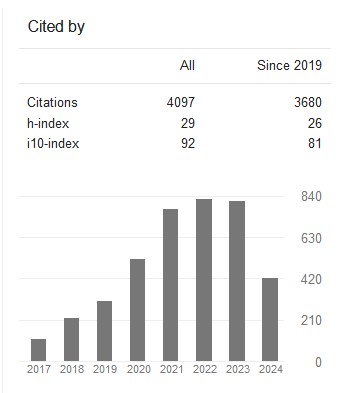
Google Scholar Analysis
For Authors








ijaems Issue
Exploring Optimization Strategies for Thermal Management Systems of New Energy Vehicles( Vol-12,Issue-3,May - June 2026 ) |
|
Author(s): Jin-Ting Deng, Yan-Zuo Chang, Yong-Tao Zou, Zhen-Xin Feng, Ze-Hui Xian, Shi-Hao Wu, De Xiang, Hui-Ni Chen |
Download Full Text PDF
Total View : 209
Downloads : 3
Page No: 314-331
|
Keywords: |
|
|
control strategy optimization, integrated thermal management, new energy vehicles, refrigerant substitution, thermal management system |
|
Abstract: |
|
|
With the advancement of industrialization, new energy vehicles (NEVs) have become crucial for mitigating air pollution and global warming, and the thermal management system (TMS) has emerged as a key component affecting vehicle safety, performance, and comfort. For battery electric vehicles (BEVs), the TMS has evolved from a set of decentralized auxiliary circuits into a vehicle-level energy dispatch hub. This paper examines the heat generation mechanisms, key components, and refrigerant/coolant paths of the battery, motor/drive, and cabin air conditioning subsystems, and compares the integrated architectures of Tesla, Xiaomi, and BYD. The analysis shows that integration, intelligent control, and working fluid substitution are the main optimization directions. Integration strategies include centralized octovalve, discrete multi-valve, and direct-cooling/direct-heating schemes. Intelligent control is moving from PID to model predictive control and reinforcement learning, while the natural refrigerants R290 and R744 offer advantages in wide-temperature adaptability and low-temperature performance, respectively. In addition, immersion cooling, composite phase-change materials, digital twins, and predictive thermal management are extending optimization from hardware and algorithms to materials, cloud, and life-cycle management. Ultimately, the future competitiveness of TMS will rely on unifying structural integration, intelligent control, and refrigerant switching into a coherent engineering system under the constraints of wide-temperature-range adaptation, high-performance chip cooling, and environmental regulations. |
|
| Article Info: | |
|
Received: 30 Apr 2026; Received in revised form: 29 May 2026; Accepted: 02 Jun 2026; Available online: 07 Jun 2026 |
|
Cite This Article: |
|
|
Citations:
APA | ACM | Chicago | Harvard | IEEE | MLA | Vancouver | Bibtex
| |
Share: |
|
 DOI:
DOI: