 DOI:
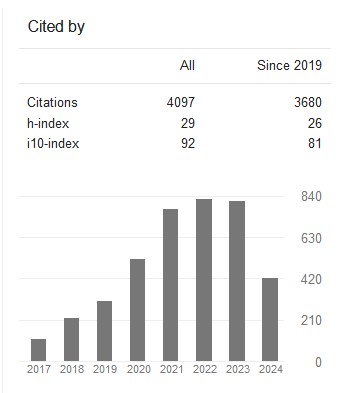
DOI: Google Scholar Analysis
For Authors







ijaems Issue
History of AI in U.S. Defense and Political Systems: Strategies for Sustained Leadership, Cyber Resilience, and a Secure Future( Vol-10,Issue-4,May - June 2024 ) |
|
Author(s): Ashikur Rahman |
Download Full Text PDF
Total View : 154
Downloads : 4
Page No: 60-67
|
Keywords: |
|
|
Artificial Intelligence, Algorithmic Warfare, Project Maven, Joint All-Domain Command and Control (JADC2) |
|
Abstract: |
|
|
This thesis examines the deep historical integration, contemporary crises, and prospective trajectories of artificial intelligence (AI) within the defense architectures and political systems of the United States. It provides an exhaustive analysis of early computational paradigms, the operational breakthroughs of algorithmic warfare, and the structural pressures exerted by adversarial counter-AI operations. Drawing upon General-Purpose Technology (GPT) diffusion theory, OODA-loop compression metrics, and organizational change models, this study evaluates how the U.S. can sustain its strategic primacy while maintaining democratic accountability. Special focus is given to the unprecedented escalations witnessed between 2024 and 2026, including multi-agent disinformation campaigns, "living-off-the-land" cyber-physical attacks on critical infrastructure, and real-time algorithmic targeting matrices deployed in localized theaters of conflict. The paper establishes an integrated policy framework advocating cryptographic data provenance, zero-trust software pipelines, and institutional reforms within the Department of Defense (DoD) procurement architecture. Ultimately, it provides an engineering and policy blueprint for a secure, resilient human-machine ecosystem capable of safeguarding international stability through mid-century. |
|
| Article Info: | |
|
Received: 14 May 2024; Received in revised form: 14 Jun 2024; Accepted: 20 Jun 2024; Available online: 25 Jun 2024 |
|
Cite This Article: |
|
|
Citations:
APA | ACM | Chicago | Harvard | IEEE | MLA | Vancouver | Bibtex
| |
Share: |
|
 DOI:
DOI: