
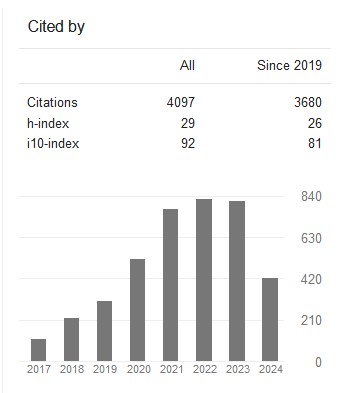
Google Scholar Analysis
For Authors








ijaems Issue
Implementation of 5G Network Technologies in Telematics Control Units within Electric Vehicle Architectures: A Systematic Literature Review( Vol-12,Issue-3,May - June 2026 ) |
|
Author(s): Sunil Sharma |
Download Full Text PDF
Total View : 254
Downloads : 5
Page No: 167-183
|
Keywords: |
|
|
5G, telematics control unit, electric vehicle, vehicle-to-everything, network slicing, PRISMA |
|
Abstract: |
|
|
The transition from 4G/LTE to 5G cellular technologies coincides with the rapid adoption of electric vehicles, hereafter EVs, and places fresh technical demands on the in-vehicle Telematics Control Unit, hereafter TCU, which serves as the gateway between the EV and external networks. The implementation specifics of 5G in EV TCUs span radio access, network slicing, multi-access edge computing, security, and standardisation, and the evidence on these aspects has yet to be synthesised within a single methodological framework. The review identifies, appraises, and synthesises peer-reviewed evidence on the implementation of 5G technologies in EV-architecture TCUs published between January 2019 and April 2026. From the corpus, the synthesis derives a thematic map covering architectures, performance characteristics, EV-specific use cases, security mechanisms, and deployment barriers. A PRISMA 2020-compliant systematic literature review was conducted across IEEE Xplore, Scopus, Web of Science, ACM Digital Library, and ScienceDirect. The database search was supplemented by backward and forward citation searches, as well as hand-searching of three target journals. Two reviewers screened records independently in Rayyan, with disagreements resolved by consensus and, where consensus failed, by a third reviewer. Methodological quality was appraised with the Mixed Methods Appraisal Tool, version 2018, and synthesis followed the narrative thematic approach of Popay et al. (2006). Nineteen studies met the inclusion criteria. Five interrelated themes emerged from the synthesis. The first theme covered radio-access architecture and 5G New Radio features, including C-V2X and PC5 sidelink. The second theme covered TCU hardware–software integration with EV in-vehicle networks. The third theme covered EV-centric use cases such as vehicle-to-grid power exchange, hereafter V2G, battery telematics, and over-the-air updates. The fourth theme addressed cybersecurity, privacy, and trusted execution within the TCU stack. The fifth theme captured deployment barriers spanning spectrum harmonisation, certification, and operator-side network slicing. Methodological quality across the corpus was moderate to high, with a mean MMAT score of 3.9 out of 5 and a range of 2 to 5. 5G extends TCU capabilities through ultra-reliable low-latency communication, enhanced mobile broadband, and slicing. Real-world EV deployments remain constrained by mixed 5G non-standalone coverage, OEM-level fragmentation of TCU stacks, and the regulatory burden imposed by UNECE R155/R156. The review proposes an EV-TCU implementation reference model and identifies four research priorities, including longitudinal performance studies and standardisation of V2G signalling over 5G.The review was not prospectively registered. The protocol is available on request from the corresponding author. |
|
| Article Info: | |
|
Received: 16 Apr 2026; Received in revised form: 14 May 2026; Accepted: 17 May 2026; Available online: 20 May 2026 |
|
Cite This Article: |
|
|
Citations:
APA | ACM | Chicago | Harvard | IEEE | MLA | Vancouver | Bibtex
| |
Share: |
|
 DOI:
DOI: