
Google Scholar Analysis
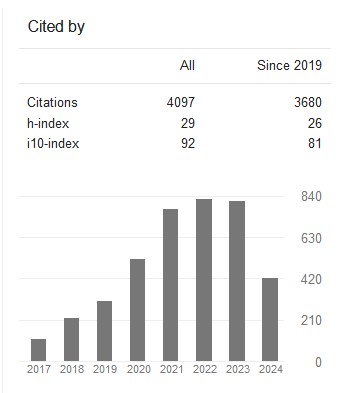
For Authors








ijaems Issue
Mechanisms for preserving architectural consistency and system knowledge context during the transition to generative AI-driven development( Vol-12,Issue-3,May - June 2026 ) |
|
Author(s): Shaliev Andrii |
Download Full Text PDF
Total View : 249
Downloads : 4
Page No: 009-016
|
Keywords: |
|
|
architectural consistency, system knowledge context, generative development, language models, architectural invariants, architectural memory, software architecture. |
|
Abstract: |
|
|
This article examines architectural mechanisms for preserving architectural consistency and system knowledge context during the transition to generative-oriented software development. The study adopts an analytical synthesis of recent empirical and review research, treating generative development as a system-level architectural process rather than a model-centric activity. The analysis builds on recent studies on the use of language models in architecturally significant engineering processes, as well as on approaches to explicit knowledge representation, architectural decision capture, and process-level governance of software development. It is shown that the risks of architectural degradation in generative development are driven not so much by the quality of individual generation outputs as by the absence of mechanisms for maintaining architectural invariants and causal relationships between requirements, decisions, and their implementation. The reviewed empirical evidence suggests that preserving repository-level architectural context improves the functional correctness of automatically generated artifacts; however, this effect does not extend to the level of system decomposition and inter-service interactions. Special attention is given to interpreting architectural consistency as a cross-cutting property of the development process, shaped by the interaction of external knowledge representations, architectural decision capture mechanisms, and managed process control loops. It is shown that none of these mechanisms in isolation ensures stable preservation of architectural integrity in generative development. The article may be of interest to researchers and practitioners in the fields of software architecture, architectural knowledge management, and the industrial application of generative technologies. |
|
| Article Info: | |
|
Received: 29 Mar 2026; Received in revised form: 28 Apr 2026; Accepted: 03 May 2026; Available online: 06 May 2026 |
|
Cite This Article: |
|
|
Citations:
APA | ACM | Chicago | Harvard | IEEE | MLA | Vancouver | Bibtex
| |
Share: |
|
 DOI:
DOI: