
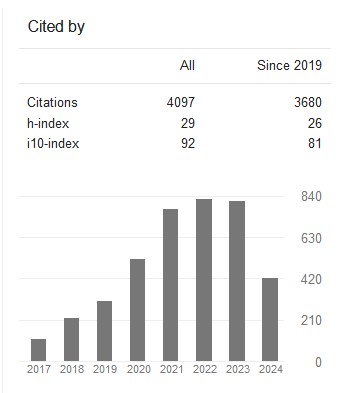
Google Scholar Analysis
For Authors








ijaems Issue
Real-Time Intrusion Detection Leveraging Deep Learning: A Comparative Analysis of CNN, RNN, and Transformer Architectures( Vol-11,Issue-5,September - October 2025 ) |
|
Author(s): Dr. Mohammed Musthafa |
Download Full Text PDF
Download with Cover Page
Total View : 1124
Downloads : 4
Page No: 064-072
|
Keywords: |
|
|
Cybersecurity, Intrusion Detection, Deep Learning, RNN, Transformer |
|
Abstract: |
|
|
Due to the rapid increase in digital data and the rise in sophisticated cyber threats, the demand for smart, automated, and scalable cybersecurity solutions are more essential now than ever. Conventional intrusion detection systems (IDS) typically use signature-grounded or heuristic approaches, which have difficulty identifying new or advanced attacks in live. Recent progress in artificial intelligence (AI), especially deep learning (DL), has unveiled new possibilities in creating adaptive and live threat spotting systems that can learn intricate patterns from extensive flows of network data. This study examines and contrasts the effectiveness of three advanced deep learning frameworks—CNN, RNN, and Transformer models (TMs) — in live intrusion detection within cybersecurity contexts. The research employs benchmark datasets like CIC-IDS2017 and UNSW-NB15, which feature a varied collection of contemporary cyber threats, including DoS, DDoS, botnets, and brute-force assaults. Each model is trained and evaluated with the help of the identical preprocessing pipeline encompassing normalization, encoding, and live simulation of data flow to properly represent the real deployment. The detection performances are evaluated along the accuracy, false rate, precision, recall, F1 score, and inference duration on each event. In addition, special significance is laid on each Model's ability to generalize on unknown attack types and deliver responses within milliseconds, a vital consideration in live detection and prevention. Initial observations point out that while CNNs are proficient in drawing spatial features from static data chunks, RNNs outperform them in time-sequence patterns recognition for time-series network traffic. Nevertheless, the TM fares better in accuracy and in terms of generalization abilities; its self-attention mechanism is at work to capture dependencies efficiently both in short and long ranges without the constraints involved during training of RNNs. Moreover, Transformer-powered Models fine-tuned for low-latency inference present the best compromise between speed and accuracy for live cybersecurity purposes. |
|
| Article Info: | |
|
Received: 17 Aug 2025; Received in revised form: 18 Sep 2025; Accepted: 22 Sep 2025; Available online: 25 Sep 2025 |
|
Cite This Article: |
|
|
Citations:
APA | ACM | Chicago | Harvard | IEEE | MLA | Vancouver | Bibtex
| |
Share: |
|
 DOI:
DOI: