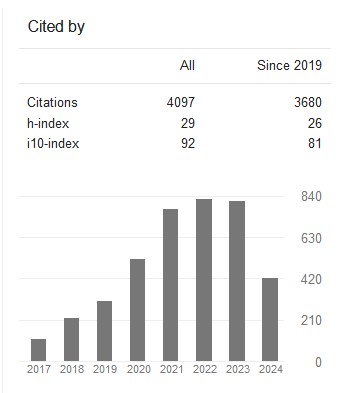
Google Scholar Analysis
For Authors








ijaems Issue
Shipping line digital workflow efficiency on service quality and delivery( Vol-12,Issue-1,January - February 2026 ) |
|
Author(s): April Jane C. Udaundo, Chrissa Jean Q. Hipe, Charlene C. Garcia, Marivic B. Tumanda, Lani D. Deada, Marmelo V. Abante |
Download Full Text PDF
Total View : 446
Downloads : 7
Page No: 068-084
|
Keywords: |
|
|
Digital workflow, shipping lines, service quality, delivery performance, maritime digitalization |
|
Abstract: |
|
|
In this paper, we examine the influence of digital workflow efficiency on service quality and delivery performance outcomes in the Philippine shipping line industry. As global logistics evolve through digital transformation and rising e-commerce demands, shipping lines face increasing pressure to modernize operations and eliminate manual inefficiencies. Using a quantitative descriptive-correlational design, the researchers surveyed 50 logistics professionals in Metro Manila to assess perceptions of digitalization across key areas: real-time data, tracking portals, e-documentation, delivery orders, online freight payment, quotation rates, and container management. Statistical analysis, including Pearson correlation, revealed significant positive relationships between digital workflow systems and operational efficiency indicators. The findings show that digital tools enhance transparency, responsiveness, coordination, and overall operational agility, leading to improved service quality and customer satisfaction. Real-time data and tracking portals emerged as the most influential factors, while e-documentation also contributed to streamlined processes and reduced administrative delays. Despite these benefits, challenges such as system errors, data accuracy, user adaptation, and staff training remain. The study concludes that digitalization is a strategic enabler of competitiveness, resilience, and long-term sustainability in maritime logistics, and recommends continued investment in digital infrastructure, workforce development, and system integration to fully realize its transformative potential in the Philippine shipping sector. |
|
| Article Info: | |
|
Received: 05 Jan 2026; Received in revised form: 09 Feb 2026; Accepted: 12 Feb 2026; Available online: 16 Feb 2026 |
|
Cite This Article: |
|
|
Citations:
APA | ACM | Chicago | Harvard | IEEE | MLA | Vancouver | Bibtex
| |
Share: |
|
 DOI:
DOI: