
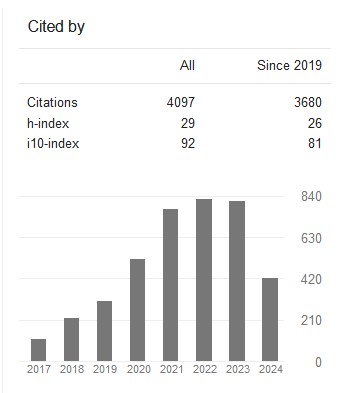
Google Scholar Analysis
For Authors








ijaems Issue
Application of Industrial Internet of Things in Fastener Forming Process Quality( Vol-12,Issue-2,March - April 2026 ) |
|
Author(s): Chih-Wei Hsu |
Download Full Text PDF
Total View : 174
Downloads : 1
Page No: 047-057
|
Keywords: |
|
|
Manual sampling inspection, Industrial Internet of Things (IIoT), Fastener forming process, Sensor deployment, Machine networking, Big data. |
|
Abstract: |
|
|
In the manufacturing industry, the current common practice for quality traceability and anomaly detection is to purchase a large number of inspection devices and implement full inspection of semi-finished and finished products to fulfill quality assurance commitments to customers. However, this approach consumes significant production time, labor, and related resources. Therefore, to save costs, many factories currently adopt "manual sampling inspection" for quality monitoring, but this method fails to achieve comprehensive quality management. To prevent the escalation of losses caused by defective products and to improve yield rates, full inspection of all finished products at a high cost becomes necessary.The Industrial Internet of Things (IIoT)-embedded fastener forming process system, through sensor deployment and machine networking to collect big data, can avoid decision-making models that previously relied solely on experienced operators and the substantial losses caused by delayed responses. This system eliminates the need to maintain inventory and tie up capital to handle large quantities of scrapped products. The approach described in this paper can halt machine operation before anomalies occur, preventing the escalation of losses. More importantly, through the recording of historical data, it enables traceability of factors related to personnel, machines, materials, methods, measurement, and environments—namely, 5M1E. Big data analysis of processing conditions helps identify the root causes of anomalies and implement effective countermeasures to achieve optimal condition settings, while also extending the manufacturing lifecycle. |
|
| Article Info: | |
|
Received: 03 Feb 2026; Received in revised form: 05 Mar 2026; Accepted:10 Mar 2026; Available online: 13 Mar 2026 |
|
Cite This Article: |
|
|
Citations:
APA | ACM | Chicago | Harvard | IEEE | MLA | Vancouver | Bibtex
| |
Share: |
|
 DOI:
DOI: